

Walk through any department store fragrance counter and you’ll notice something: everything smells vaguely like everything else. There’s a reason for that. The major fragrance houses that supply scents to designer brands operate from a shared palette of widely approved synthetic materials, calibrated for maximum market appeal. The result is a landscape of fragrances that are technically competent, often genuinely pleasant, and almost completely interchangeable.
Niche perfumery emerged as a response to exactly that situation. And over the past two decades, it has quietly transformed not just what people are wearing, but how they think about fragrance entirely.
What “Niche” Actually Means
The word gets misused often enough that it’s worth defining. Niche perfumery refers to fragrance houses that operate independently of the major luxury conglomerates – companies that prioritize creative vision over mass-market appeal, use higher-quality and often more unusual ingredients, and produce in smaller quantities for more discerning audiences.
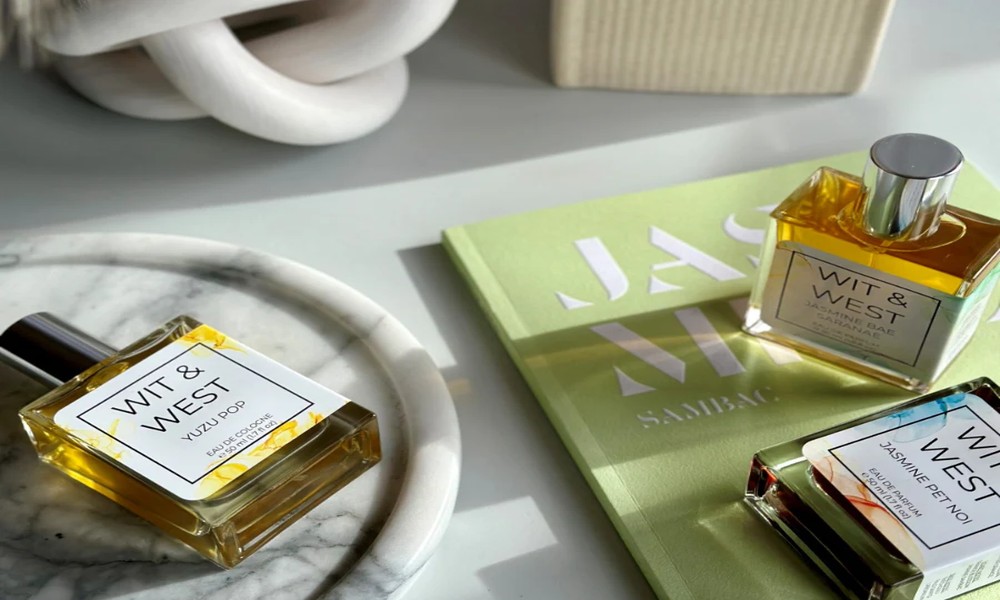
The niche category spans a wide range, from boutique European houses with elaborate aesthetic programs to individual artisan perfumers working out of small studios. Wit & West sits firmly in the artisan end of that spectrum – a husband-and-wife operation in Colorado, making 100% natural fragrances by hand in small batches, with Wit personally formulating every scent. That’s about as independent and vision-driven as perfumery gets.
The Education Effect
One of the most significant things niche perfumery has done is educate consumers. When you buy a designer fragrance, the story you’re sold is almost entirely aspirational – the lifestyle, the celebrity, the heritage of the brand. The fragrance itself is incidental to the marketing.
Niche and artisan perfumers tend to talk about fragrance differently. They discuss ingredients. They explain what an absolute is versus an essential oil. They describe the arc of a scent from top to base, why a natural fragrance evolves on your skin over time, and what it means for something to be 100% botanical. Sites like Fragrantica – which published a glowing in-depth review of Wit & West’s Caldera Flower – have built entire communities around this kind of granular, ingredient-level engagement with fragrance.
The result is a generation of fragrance consumers who know more about what they’re wearing than any previous generation did. They ask questions. They read about sourcing. They understand that the price of a genuine rose absolute reflects actual labor and actual scarcity. That’s a transformation in consumer literacy that niche perfumery drove almost single-handedly.
The Death of the Signature Scent (Sort Of)
For most of the twentieth century, the dominant consumer behavior in fragrance was finding one scent and wearing it loyally for years. That loyalty was often to a brand as much as to a fragrance. The idea of a “signature scent” was real and relatively universal.
Niche perfumery helped dismantle that model – not entirely, but significantly. Exposure to more complex, more varied, more interesting fragrances tends to produce collectors rather than loyalists. People who discover artisan natural fragrance rarely stop at one. They begin to think in terms of a fragrance wardrobe: different scents for different moods, seasons, occasions. They become curious about the craft itself.
This is a fundamentally different relationship with fragrance than buying a bottle of something because it was advertised during a film awards ceremony. It’s personal, considered, and ongoing.
Natural Perfumery as the Frontier
Within niche perfumery, the all-natural category represents a particular kind of radicalism. Working exclusively with botanical materials means accepting constraints that synthetic chemistry eliminates. Natural perfumes don’t last as long. They’re more expensive per volume. They vary by batch and season. They can’t produce certain effects – the crystalline ozonic note of a synthetic aquatic, for example, simply doesn’t exist in nature.
And yet the best natural perfumers would argue – and many consumers would now agree – that what natural materials offer in return is worth those constraints. A quality that’s harder to name than to smell: complexity, honesty, depth, the sense that you’re wearing something connected to the physical world rather than assembled in a laboratory.
When Fragrantica’s Beth Butterfield reviewed Caldera Flower and called it “exceedingly transportive,” noting its “photorealism and ability to transport me to Panama,” she was describing something that synthetic ingredients can approximate but rarely achieve. That sense of place, of genuine botanical character, is what natural perfumery at its best delivers.
What This Means for Mainstream Fragrance
The major houses haven’t ignored the shift. “Clean” fragrance has become a massive marketing category, though the term is largely unregulated and often applied to products that simply replaced one set of synthetic ingredients with another. Some mainstream brands have launched “natural” sub-lines while continuing to use synthetics throughout their primary collections.
The consumer sophistication that niche perfumery has cultivated makes these moves easier to see through. Once you’ve worn a genuine 100% botanical fragrance, one that takes on color from its own ingredients and evolves genuinely on your skin, the distinction becomes obvious.
Where It Goes From Here
Niche and artisan perfumery is not a niche trend. It’s a permanent shift in how a growing segment of consumers relates to fragrance – as craft, as identity, as a sensory experience worth understanding rather than just purchasing. That shift favors producers who are genuinely doing what they say they’re doing.
Wit & West is one of them. If you’re ready to step off the department store carousel and into something more interesting, the Scent Quiz at witandwest.com is a good place to start. The fragrance landscape is far wider and far more remarkable than the counters at the mall would have you believe.