
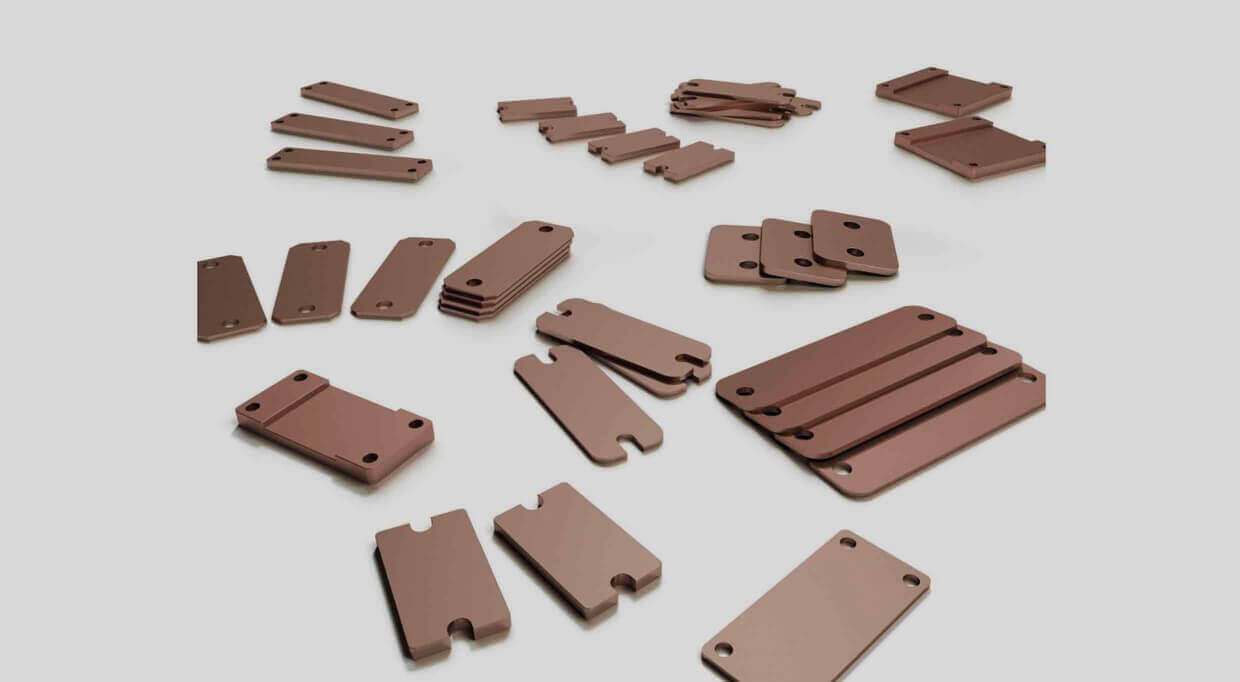

The tungsten heat sink sits at the intersection of materials science and necessity, a response to the relentless march towards smaller, more powerful electronics that generate heat beyond what conventional cooling methods can manage. In laboratories and manufacturing facilities across the globe, engineers confront a fundamental truth: as we pack more computational power into smaller spaces, we create thermal challenges that threaten the very devices we depend upon. The heat must go somewhere. It must be absorbed, conducted away, dissipated before it damages delicate circuitry or degrades performance. This is where tungsten enters the story, an element so dense and thermally capable that it has become indispensable in applications where failure is not an option.
The Weight of Density
Tungsten possesses a density of 19.3 grammes per cubic centimetre, making it one of the heaviest metals available for commercial use. This is not merely a curiosity of the periodic table. Density translates directly into thermal mass, the capacity to absorb heat without rapid temperature rise. A tungsten heat sink can soak up thermal energy the way a massive stone wall absorbs the day’s heat, slowly and steadily, preventing the sharp temperature spikes that damage electronic components.
The thermal conductivity of tungsten reaches 173 watts per metre-kelvin, respectable though not spectacular when compared to copper or aluminium. Yet tungsten offers something these lighter metals cannot: stability at extreme temperatures. Where copper softens and aluminium melts, tungsten maintains its structural integrity. It can operate continuously at temperatures exceeding 1,000 degrees Celsius without degradation, a capability that opens possibilities in high-power applications.
Where Conventional Solutions Fail
Consider the environments where a tungsten heat sink becomes necessary. High-power laser diodes concentrate enormous energy into tiny semiconductor junctions. Radar systems pulse kilowatts through components no larger than a fingernail. Power electronics in electric vehicles switch currents that would vaporise conventional materials. In each case, the heat generation occurs in confined spaces where every cubic millimetre matters.
Singapore’s tungsten heat sink applications span these demanding sectors, serving industries where thermal management directly affects safety, reliability, and performance. The aerospace sector cannot tolerate cooling failures at altitude. Medical laser systems must maintain precise temperatures to ensure patient safety. Military electronics face hostile environments where equipment failure carries consequences beyond mere inconvenience.
The Engineering Compromise
Using tungsten requires acknowledging its limitations. The material is expensive, often ten to twenty times the cost of copper per kilogramme. It is difficult to machine, wearing down cutting tools and requiring specialised equipment. Its weight, whilst beneficial for thermal mass, becomes problematic in applications where every gramme matters. Yet engineers specify tungsten heat sink solutions precisely because certain problems admit no cheaper alternative.
The design process involves careful calculation:
- Thermal load analysis determines how much heat must be dissipated
- Junction temperature limits establish acceptable operating ranges
- Space constraints dictate maximum heat sink dimensions
- Weight budgets influence material selection and design optimisation
- Cost considerations balance performance requirements against budget realities
These calculations reveal whether tungsten’s advantages justify its drawbacks. In many high-power applications, they do. The alternative might be a larger cooling system, active cooling with moving parts prone to failure, or accepting reduced power output and diminished performance.
Manufacturing and Form
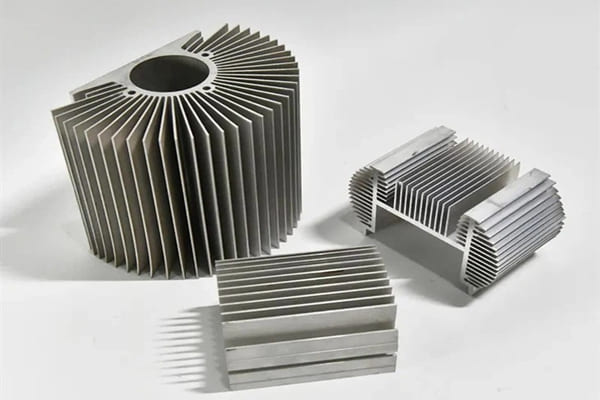
A tungsten heat sink can take many shapes. Simple blocks with flat mounting surfaces serve straightforward applications. Finned designs increase surface area for convective cooling. Complex geometries with internal channels accommodate liquid cooling systems. Modern manufacturing techniques including powder metallurgy and metal injection moulding enable shapes that would be impossible to machine from solid billets.
The surface finish matters enormously. A rough interface between the heat source and the tungsten heat sink introduces thermal resistance, tiny air gaps that impede heat transfer. Manufacturers lap surfaces to optical flatness, creating intimate contact that maximises thermal coupling. Thermal interface materials fill microscopic imperfections, but nothing substitutes for precision in the base manufacturing.
Composite Solutions
Recognising tungsten’s limitations, engineers increasingly employ composite approaches. A tungsten heat sink might form the core, directly contacting the heat source, whilst copper fins extend from this central mass to increase surface area for heat dissipation. This hybrid design exploits tungsten’s high-temperature capability where needed whilst using copper’s superior conductivity and lower cost where possible.
Some applications employ tungsten-copper alloys, materials that blend tungsten’s thermal mass with copper’s conductivity. The resulting composite exhibits properties intermediate between the pure metals, offering designers additional options in the thermal management toolkit. Singapore’s tungsten heat sink manufacturers have developed expertise in these composite solutions, serving clients whose applications demand customised thermal properties.
The Hidden Infrastructure
We rarely see these components. They hide inside sealed enclosures, buried within equipment that populates server rooms, telecommunications infrastructure, and industrial facilities. Yet their presence enables the technologies we depend upon. The 5G base station transmitting data to your mobile phone contains power amplifiers cooled by precision-engineered heat sinks. The CT scanner imaging a patient’s injury relies on X-ray tubes that generate prodigious heat. The satellite maintaining GPS navigation depends on electronics that must function reliably despite the thermal extremes of space.
Each application represents choices made by engineers balancing performance, cost, reliability, and the physical constraints of their designs. The decision to specify a tungsten heat sink reflects an assessment that conventional solutions would fail, that the thermal challenge exceeds what lighter, cheaper materials can manage. It is a choice driven by necessity, constrained by physics, and enabled by our understanding of materials and their properties.
The Ongoing Challenge
As electronics grow more powerful and more compact, thermal management becomes increasingly critical. The tungsten heat sink remains one tool among many, specified when its unique combination of density, thermal mass, and high-temperature capability matches the application’s requirements, ensuring that the devices we depend upon operate reliably within the thermal limits that physics imposes.